For years, most people interacted with artificial intelligence by asking a question and waiting for an answer. You typed a prompt into an AI chatbot, received a response, and then decided what to do next.
Agentic AI is changing that relationship.
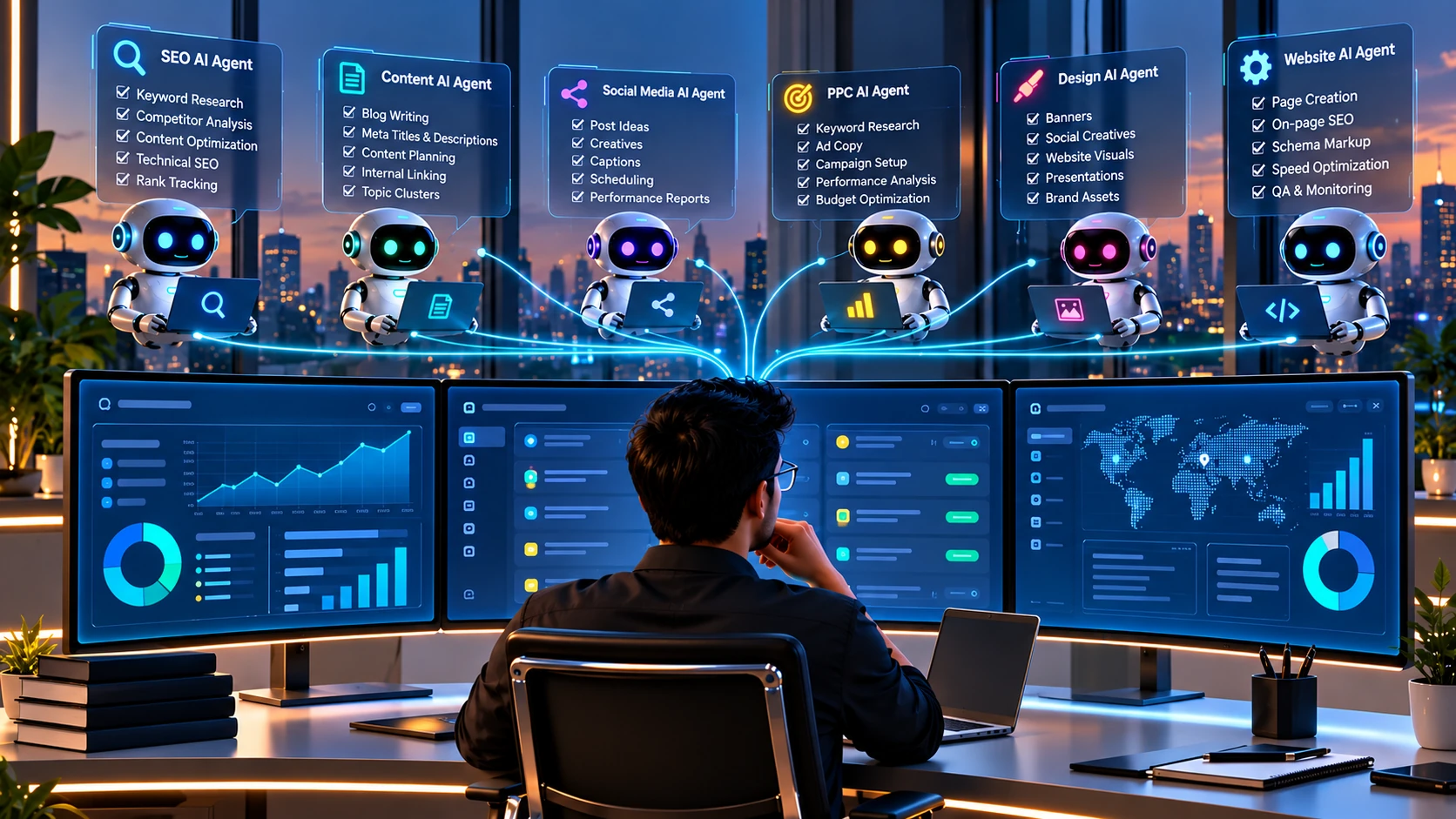
Instead of simply answering questions, AI agents can work toward a goal, decide which steps are required, use connected tools, process information and perform actions with varying levels of human supervision.
This shift from AI that mainly responds to AI that can also act is becoming an important technology trend in 2026.
Google, for example, describes AI agents as systems capable of understanding a goal, developing multi-step plans and taking actions under human guidance. The company has also been expanding agentic capabilities across enterprise and consumer products.
So, what exactly is agentic AI, and why does it matter?
What Is Agentic AI?
Agentic AI refers to artificial intelligence systems designed to pursue a goal by completing multiple tasks rather than handling only a single prompt.
Imagine telling a traditional chatbot:
“Help me prepare for tomorrow’s client meeting.”
It might provide a checklist.
An AI agent connected to the right business tools could potentially do much more. It might review meeting information, locate relevant documents, summarize previous notes, prepare a briefing and create follow-up tasks.
The key difference is action.
Traditional generative AI mainly generates content or answers. Agentic systems can combine reasoning, planning, tool use and actions to complete a broader workflow.
How Do AI Agents Work?
An AI agent usually starts with a goal.
The system interprets that goal and determines what needs to happen next. Depending on its design and permissions, it may then access information or interact with external tools.
A simplified process looks like this:
Goal → Plan → Use Tools → Take Action → Check Result → Continue or Ask for Help
Suppose a sales team wants an AI agent to organize new leads.
The agent might:
- Collect new lead information.
- Check whether the lead already exists.
- Categorize the lead.
- Research relevant company information.
- Prepare a personalized follow-up draft.
- Update the CRM.
- Alert a salesperson when human attention is required.
This is much closer to a digital workflow than a normal question-and-answer chatbot.
AI Agents vs Traditional Chatbots
The two technologies are related, but they are not identical.
A chatbot generally reacts to individual prompts. An AI agent can potentially maintain a goal across several steps.
For example, a chatbot can write an email.
An agent may be able to determine when an email is needed, prepare it using available context, request approval and then trigger the next workflow step.
This doesn’t mean every AI agent operates completely independently. In business environments, human approvals and access controls can be extremely important.
How AI Agents Are Changing Work in 2026
One major change is the automation of multi-step processes.
Traditional automation works particularly well when rules are predictable:
If X happens → perform Y.
Agentic systems are designed for workflows where some interpretation or decision-making is required along the way.
Google Cloud expects agentic workflows to become increasingly important in business processes, including systems where multiple agents coordinate across tasks.
Microsoft is similarly building around agents that can perform longer-running work across areas such as software development, support, finance, HR and operations, while emphasizing governance and human oversight.
Where Are AI Agents Being Used?
Customer Support
AI agents can help classify support requests, search knowledge bases, prepare responses and route complex cases to human representatives.
Sales
Agents can support prospect research, CRM updates, meeting preparation and follow-up workflows.
Marketing
Marketing teams can use AI-assisted workflows for research, content planning, campaign reporting and repetitive administrative tasks.
Software Development
Coding agents can assist with writing code, debugging, documentation, testing and other development activities.
Data Analysis
Instead of manually building every report, users may increasingly interact with company data through natural-language requests.
Administration
Scheduling, document organization, meeting summaries and routine communication are also natural candidates for agent-assisted workflows.
Why Businesses Are Interested in Agentic AI
The main attraction is not simply replacing people.
It is reducing the amount of repetitive work people need to perform manually.
Employees often spend time moving information between systems, checking documents, preparing routine reports and completing repetitive administrative steps.
When implemented correctly, AI agents can help employees spend more time on judgment, customer relationships, strategy and creative work.
But AI Agents Are Not Perfect
Giving an AI system the ability to act also introduces additional risk.
A chatbot providing an incorrect answer is one problem. An agent taking an incorrect action can be more serious.
For example, an agent with excessive permissions could access information it doesn’t need or perform an unintended action.
NIST’s 2026 work on AI-agent security highlights risks associated with agents interacting with software systems, data and external tools.
That means organizations should think carefully about permissions, authentication, monitoring and human approval.
Human Oversight Still Matters
The most useful model is often not “AI versus humans.”
It is humans working with AI.
High-impact actions may still require approval. Sensitive information should have strict access controls. Organizations should also be able to understand what an agent did and which resources it accessed.
The more power an agent receives, the more important these controls become.
Is Agentic AI the Future of Work?
Agentic AI is unlikely to make every application autonomous overnight.
However, the direction is becoming clearer.
AI is moving from a standalone tool that waits for instructions toward systems that can participate in workflows and complete tasks across connected applications.
For workers, this may mean learning a new skill: not simply prompting AI, but deciding what work should be delegated, what should remain human-controlled and how AI output should be verified.
Final Thoughts
Agentic AI represents an important evolution of artificial intelligence.
Chatbots helped people generate information. AI agents are beginning to help people execute work.
The opportunity is significant, but useful automation requires more than giving an AI model access to everything. Businesses need clear goals, appropriate permissions, monitoring and human oversight.
In 2026, understanding how to work effectively—and safely—with AI agents is becoming an increasingly useful digital skill.
FAQs
What is agentic AI?
Agentic AI describes AI systems that can pursue goals through multiple steps, use tools and take actions with varying levels of autonomy.
Are AI agents the same as chatbots?
No. Chatbots primarily respond to prompts, while agents can potentially plan and perform multiple actions toward a goal.
Can AI agents work without humans?
Some tasks can be highly automated, but important business processes often benefit from human approvals and monitoring.
Are AI agents safe?
They can be useful, but security depends heavily on permissions, authentication, monitoring, system design and the tools they can access.